
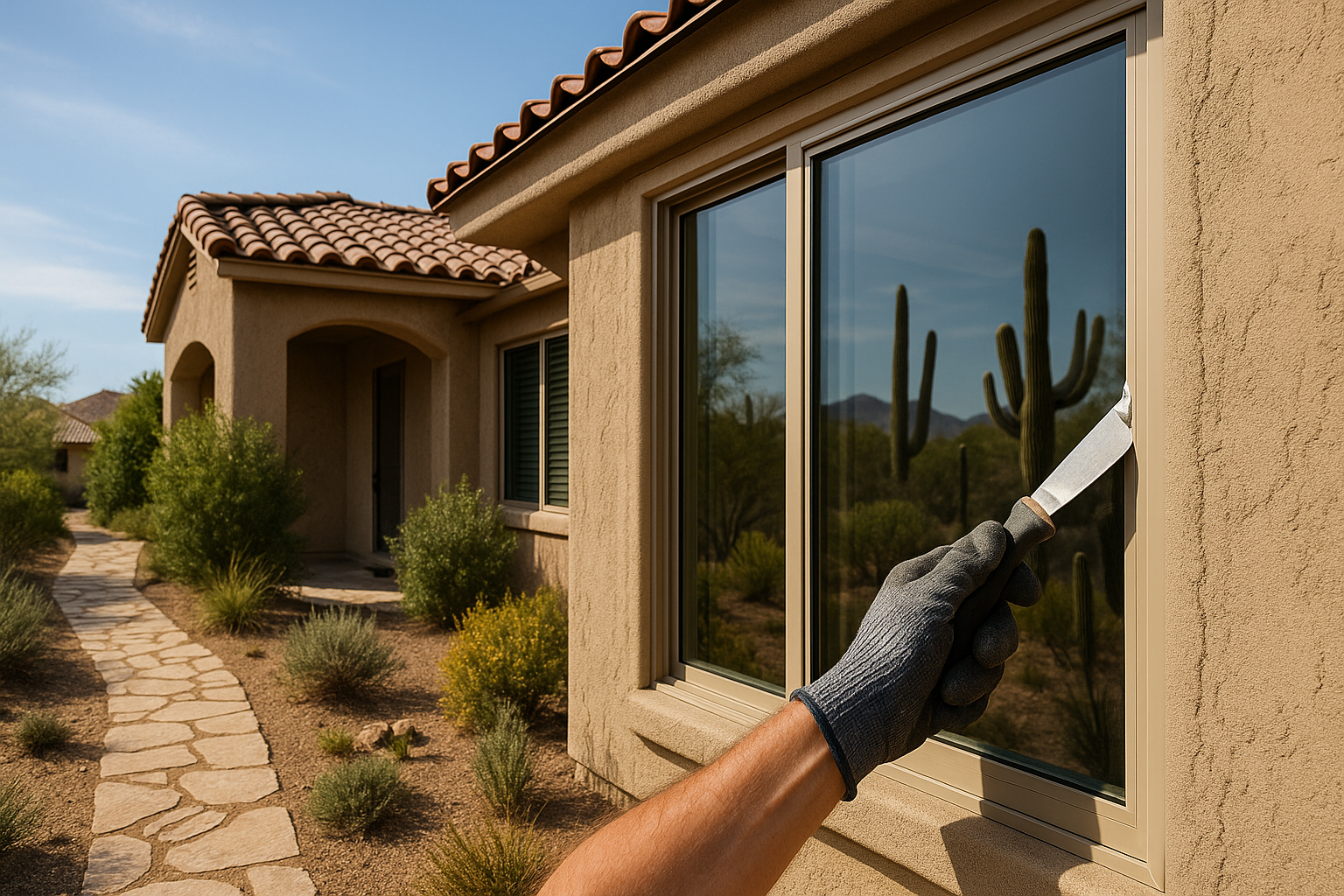
Is there anything worse than standing next to your living room window in July and feeling heat radiating off the glass like a space heater? It’s enough to make you double-check your thermostat, wondering if the AC has finally given up the ghost. But honestly, the problem usually isn’t the air conditioner; it’s the invisible gaps, tired seals, and worn-out mechanics letting the Maricopa County desert right into your home.
When Good Windows Go Bad (And Why It Happens Here)
Here’s the thing about living in the Valley—the sun is relentless. We love the winters, sure, but our materials take a beating during those long summer months. Thermal expansion is a real troublemaker. During the day, your window frames expand in the heat, and at night, they contract. Over time, that constant push-and-pull movement puts a massive amount of stress on the seals and the hardware.
It’s actually kind of fascinating, in a destructive sort of way. You don’t notice it happening day-to-day, but suddenly, the window that used to slide open with a pinky finger now requires a gym membership to budge. Or worse, you see that dreaded fogginess creeping between the panes.
It’s not just the heat, either. It’s the dust. You know exactly what I’m talking about—that fine, powdery grit that covers everything after a haboob rolls through. That dust settles into your window tracks and mixes with whatever lubricant is there (or lack thereof), creating a sort of grinding paste that eats away at your rollers. It’s a messy business, but understanding why things break is the first step to fixing them.
The “Sticky” Situation: Hardware and Mechanics
Let’s talk about the physical act of opening a window. It should feel effortless, right? When it doesn’t, people tend to force it. They yank, they shove, and eventually, something snaps.
Usually, the culprit is the balance system. In single or double-hung windows (the ones that go up and down), there’s a mechanism hidden inside the side jambs that counteracts the weight of the sash. It’s what allows the window to stay open when you lift it. When these fail—whether it’s a spiral balance losing its tension or a block and tackle system breaking a string—the window becomes dead weight. And let me tell you, glass is heavier than it looks.
If you have sliding windows, which are super common here in Arizona, the issue is almost always the rollers. These little wheels sit under the sash and glide along the track.
Common Roller Killers:
- Dirt Buildup: The track is full of pet hair and sand.
- Flat Spots: The roller stopped spinning ages ago and is just dragging.
- Corrosion: Moisture got into the bearings (thanks, monsoon season).
Replacing rollers isn’t rocket science, but it requires precision. You have to remove the sash, dig out the old hardware, and find an exact match. And honestly? There are hundreds of roller types. Getting the wrong size by even a millimeter means the window won’t sit right or lock correctly.
Wait, Don’t Use That Spray!
Okay, I need to go on a quick tangent here because this drives me crazy. I walk into homes all the time and see a can of WD-40 sitting on the window sill.
Please, for the love of your windows, put the WD-40 away.
I know, I know—it fixes everything. Squeaky door? WD-40. Stuck bolt? WD-40. But for windows in a desert environment? It’s a magnet for disaster. It’s an oil-based product, which means it stays wet. Remember that dust we talked about earlier? It sticks to the oil, turns into sludge, and gums up your rollers faster than you can say “monsoon.”
Instead, you want a dry silicone spray. It lubricates the track and then dries, leaving a slick surface that doesn’t attract dirt. It’s a small change, but it makes a world of difference. It’s funny how sometimes the “obvious” solution is actually the wrong one.
The Foggy View: dealing with Glass Failure
You’ve probably seen a window that looks permanently dirty, no matter how much you scrub the outside. That’s seal failure.
Most modern windows are IGUs—Insulated Glass Units. They consist of two (or sometimes three) panes of glass separated by a spacer bar. The space between them is often filled with Argon gas to slow down heat transfer, and the whole thing is sealed tight.
When that seal breaks—usually due to that thermal expansion I mentioned—moisture gets sucked into the gap. Then, the sun hits it, the moisture evaporates, and eventually, minerals deposit on the glass. That’s the “fog” you see.
Can you repair it? Well, yes and no.
Here is the reality of foggy windows:
- Drilling: Some companies drill holes to vent the moisture. It clears the view temporarily, but the insulation value is gone. The gas has escaped.
- Glass Replacement: This is usually the better route. We keep your existing frame (which saves money) and just swap out the IGU.
- Full Replacement: If the frame itself is warped or rotting, swapping the glass is like putting new tires on a car with a bent axle.
It’s tricky because people ignore this. They think, “Eh, it’s just a little cloudy.” But that cloudiness means your home is hemorrhaging energy. In Maricopa County, that’s money flying right out the window.
Weep Holes: The Unsung Heroes
This might sound like a weird thing to get excited about, but weep holes are vital. Have you ever noticed those little slots on the exterior bottom track of your window frame? Those aren’t there for decoration.
Their job is to let water drain out. When we get those intense, sideways rains, water will get into the track. It’s designed to happen. The weep holes give that water an escape route so it doesn’t spill over into your living room drywall.
The problem? Bugs love them. Spiders make nests in them. Dust clogs them.
So, here is a pro tip: once a year, take a pipe cleaner or a blast of compressed air and clear those little guys out. It takes five minutes, but it can save you thousands in water damage repair later. It’s one of those “ounce of prevention” things that nobody thinks about until there’s a puddle on the carpet.
The Art of the Perfect Seal
Caulking. It sounds boring, doesn’t it? But a good bead of caulk is the difference between a cozy home and a dusty, drafty one.
Over time, the sealant around the exterior of your window frame dries out and cracks. It shrinks. It pulls away from the stucco. This is a massive entry point for heat. I’ve seen gaps big enough to slide a credit card through, and the homeowner had no idea why their electric bill was so high.
Applying new sealant requires a steady hand. You can’t just slap it on over the old stuff. You have to cut out the old, failing caulk, clean the surface, and apply a high-quality, exterior-grade sealant that can handle UV exposure.
What makes a good caulk job?
- Consistency: A smooth, continuous bead.
- Adhesion: It needs to stick to both the frame and the wall.
- Flexibility: It has to move with the house as it expands and contracts.
It’s surprisingly satisfying to watch a clean line of fresh sealant go down. It feels like you’re tucking the house in tight against the elements.
Is It Time to Repair or Replace?
This is the question everyone dreads. Honestly, nobody wakes up on a Saturday morning excited to buy new windows. It’s an investment. So, how do you know if you can get away with a repair?
If the frame is solid—meaning it’s square, not rotted, and not physically broken—repair is usually a fantastic option. New rollers, new glass, and new weatherstripping can make a twenty-year-old window perform like it’s brand new. It’s often a fraction of the cost of tearing everything out.
However, if you have aluminum frames from the 80s that conduct heat like a frying pan, or if the vinyl has cracked and warped, no amount of new parts will fix the core issue. Sometimes, you just have to bite the bullet.
But you know what? A lot of the time, we can save them. There is a real sense of craftsmanship in taking something that’s broken and making it work perfectly again. Hearing that solid click of a lock engaging or feeling a sash glide smoothly after years of sticking—it’s satisfying.
Let’s Get Your View Back
Windows are your connection to the outside world. They let in the light and (hopefully) keep out the heat. When they aren’t working right, it’s a constant, subtle irritation. You shouldn’t have to wrestle with your home just to get some fresh air.
Whether you have a stuck slider, a foggy pane that’s ruining your view of the sunset, or you’re just worried about those energy bills creeping up, you don’t have to figure it out alone. Maintenance and repair require a specific touch, especially out here in the desert.
Ready to get your windows working like new again?
Contact Arizona Window Company today:
→ by phone # 480-526-4456
→ or Request a Free Quote