
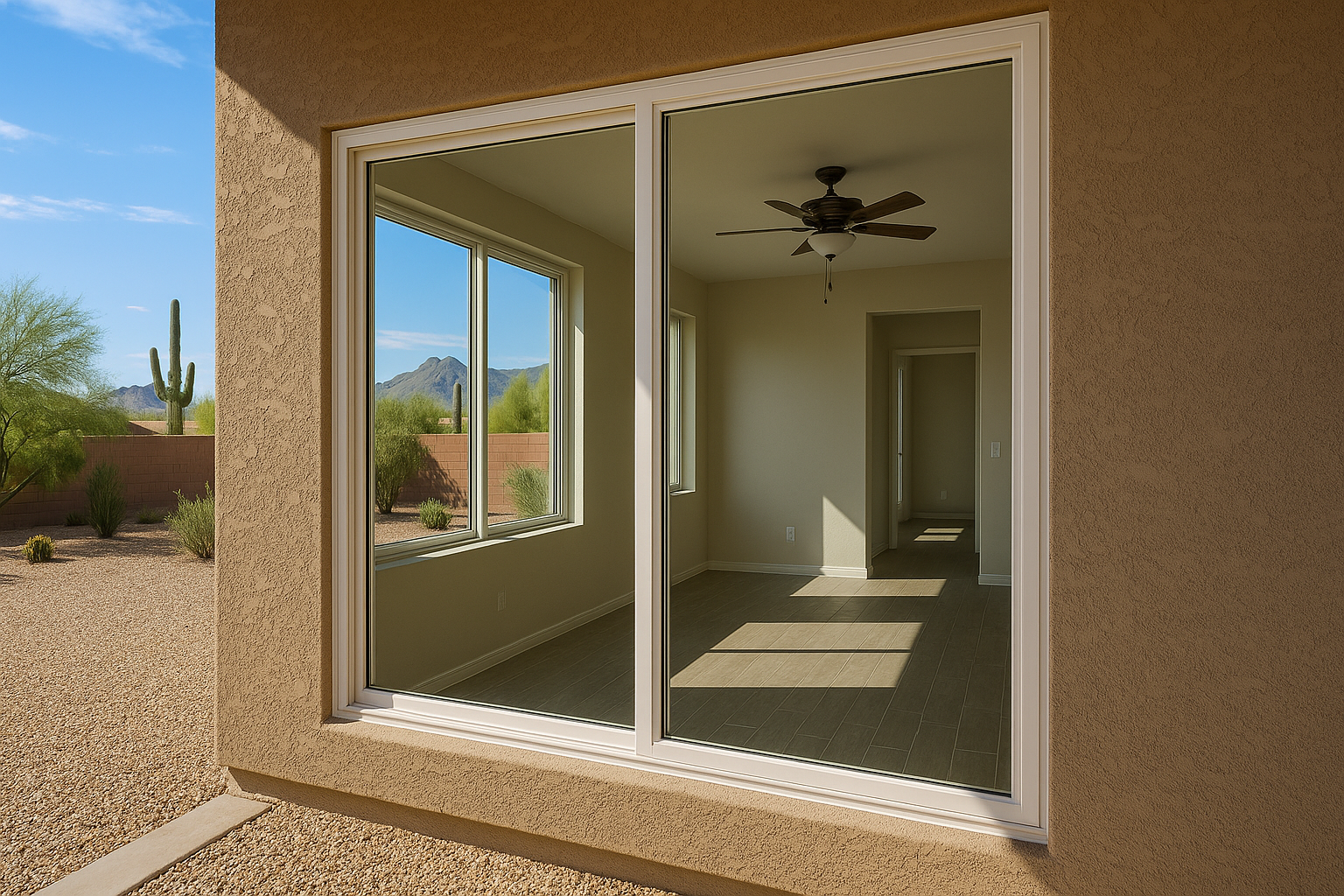
It’s no secret that keeping a home cool in the Valley costs a small fortune, especially when those triple-digit temps settle in for the long haul. But if you’ve been dreading the thought of replacing those drafty, single-pane windows because of the price tag, there is actually some good news coming from an unlikely place: the IRS. Uncle Sam is currently offering a pretty decent financial incentive to upgrade your home’s energy efficiency, effectively handing you a discount on renovations you probably needed anyway.
Contents
Wait, the IRS wants to give me money?
I know, talking about taxes is usually about as fun as stepping on a cactus barefoot. But bear with me, because this is actually money back in your pocket. We aren’t talking about complicated loopholes that require a team of lawyers to figure out; this is the Energy Efficient Home Improvement Credit (specifically, the 25C tax credit).
Here’s the thing: The government realized that if everyone uses less electricity to cool their homes, it puts less strain on the national grid. So, under the Inflation Reduction Act, they expanded the credits available for energy-efficient upgrades.
Previously, these credits were a lifetime one-and-done deal with a tiny cap. Now? It’s an annual credit. That means if you play your cards right, you can keep claiming it year after year for different projects. For windows specifically, you can claim 30% of the project cost, up to a maximum credit of $600 per year.
Now, I can hear you thinking, “Only $600? That won’t cover a whole house of windows.” And honestly? You’re right. It won’t pay for the whole job. But think of it less like a jackpot and more like a permanent 30% off coupon (up to that limit) on the materials. It takes the sting out of the initial investment.
The “Fine Print” (Made Simple)
You can’t just go to the hardware store, grab whatever is on sale, and expect a check in the mail. The government is picky. To get the credit, the windows have to meet specific energy ratings.
This is where it gets a little tricky for us here in Maricopa County. See, the EPA divides the country into climate zones. What works for a cabin up in Flagstaff isn’t going to cut it down here in Phoenix or Mesa. We are in the Southern Zone.
For a window to qualify for the tax credit here, it generally needs to be ENERGY STAR® certified for the Southern zone. This usually boils down to two weird acronyms you’ll see on the window stickers:
- U-Factor: This measures how well the window keeps heat from escaping. A lower number is better.
- SHGC (Solar Heat Gain Coefficient): This is the big one for Arizona. It measures how much solar radiation (heat) passes through the glass. You want this number low—like, really low.
If you install a window that is great at keeping heat in (like they need in Minnesota) but terrible at blocking the sun, you not only won’t get the tax credit, but your AC is also going to hate you come August.
Why $600 is Actually a Strategic Number
Let’s circle back to that money cap for a second. The credit limit for windows is $600 annually. Since you get 30% back, you max out the credit when you spend about $2,000 on windows.
If you have a massive house in Scottsdale with twenty windows to replace, doing it all at once means you still only get $600 back for that tax year. However, because the credit resets every January 1st, some savvy homeowners are splitting their projects up.
You could replace the windows on the west side of the house (where the afternoon sun brutalizes your living room) this year. Claim the $600. Then, come January, replace the windows on the south side. Boom—another $600 credit available.
Is it a hassle to have installers out twice? Maybe a little. But if it saves you an extra chunk of change, it might be worth the scheduling juggling act. It’s just something to consider if you aren’t in a rush to do everything in one weekend.
More Than Just the Tax Break
While we’re focused on the tax credit, it’s easy to lose sight of the bigger picture. The tax credit is just the cherry on top. The sundae is the drop in your monthly utility bills.
I was at a neighbor’s house the other day—lovely place over in Gilbert—and I leaned against their living room window to look at the backyard. The glass was hot to the touch. I mean, genuinely hot. That heat was radiating right into the house, fighting the air conditioning every step of the way.
When you switch to modern, energy-efficient windows (especially the dual-pane, Low-E glass types we use here), you stop that heat transfer. It’s like putting high-end sunglasses on your house.
Here’s what you actually get out of the deal:
- Lower APS/SRP bills: This is the gift that keeps on giving every month.
- Noise reduction: If you live near a busy street or have neighbors who love their leaf blowers a little too much, modern windows dampen that sound significantly.
- Dust control: You know how fine that Arizona dust is? It gets through the tiniest cracks in old aluminum frames. tighter seals mean less dusting.
- Resale value: Buyers look for this stuff now. Old, single-pane windows are a major turn-off during a home inspection.
The Paperwork: Don’t Panic
Okay, let’s assume you’re going for it. You’re getting the windows. How do you actually get the money?
You don’t get the cash immediately at the register. You claim it when you file your federal taxes the following year. You’ll likely need IRS Form 5695.
Crucial Step: When the installers are done, do not—I repeat, do not—throw away the stickers or the paperwork that comes with the windows.
- Save the NFRC Labels: These are the stickers on the glass that show the U-Factor and SHGC. Take a picture of them or peel them off and stick them to a piece of paper in your file.
- Keep the Manufacturer’s Statement: The window maker usually provides a certificate stating the product qualifies for the tax credit.
- Keep your Receipt: Obviously, you need to prove how much you paid.
It sounds like a lot, but it’s really just keeping a folder in your desk drawer. When tax season hits, you hand that folder to your accountant (or input the numbers into your tax software), and you’re good to go.
A Quick Word on “Doors”
Since we are talking about holes in your walls, I should probably mention doors, too. The same tax credit applies to exterior doors, but the limits are slightly different.
You can get:
- $250 per door
- $500 total for all doors
So, if you’re doing a front door and a patio door, you might be able to stack that on top of the window credit. The total annual limit for the 25C credit (combining windows, doors, insulation, etc.) is $1,200 (or up to $2,000 for heat pumps, but that’s a whole different conversation).
Basically, if you’re renovating, do a quick check on the limits so you don’t leave money on the table.
Is It Worth It?
Look, buying windows isn’t the most exciting purchase you’ll ever make. It’s not like buying a boat or a 75-inch TV. But living in Arizona, your windows are the frontline defense against the elements.
When you combine the immediate 30% tax credit with the long-term savings on your electric bill, the “return on investment” is actually pretty high. Plus, just being able to sit by the window in July without sweating? That’s priceless.
The tax code changes all the time, but right now, the government is essentially offering to subsidize your comfort. It seems silly not to take them up on it.
Ready to Stop Cooling the Neighborhood?
If you’re tired of watching your hard-earned money fly right out of your old, drafty windows, we should talk. At Arizona Window Company, we know exactly which Products qualify for the tax credits and, more importantly, which ones can handle the Maricopa County heat. We can help you plan your project to maximize your savings and your comfort.
Give us a call or reach out online. We’re happy to walk you through the options without any high-pressure sales tactics—just honest advice from locals who know what it’s like to pay an summer electric bill.
Call us today: 480-526-4456