
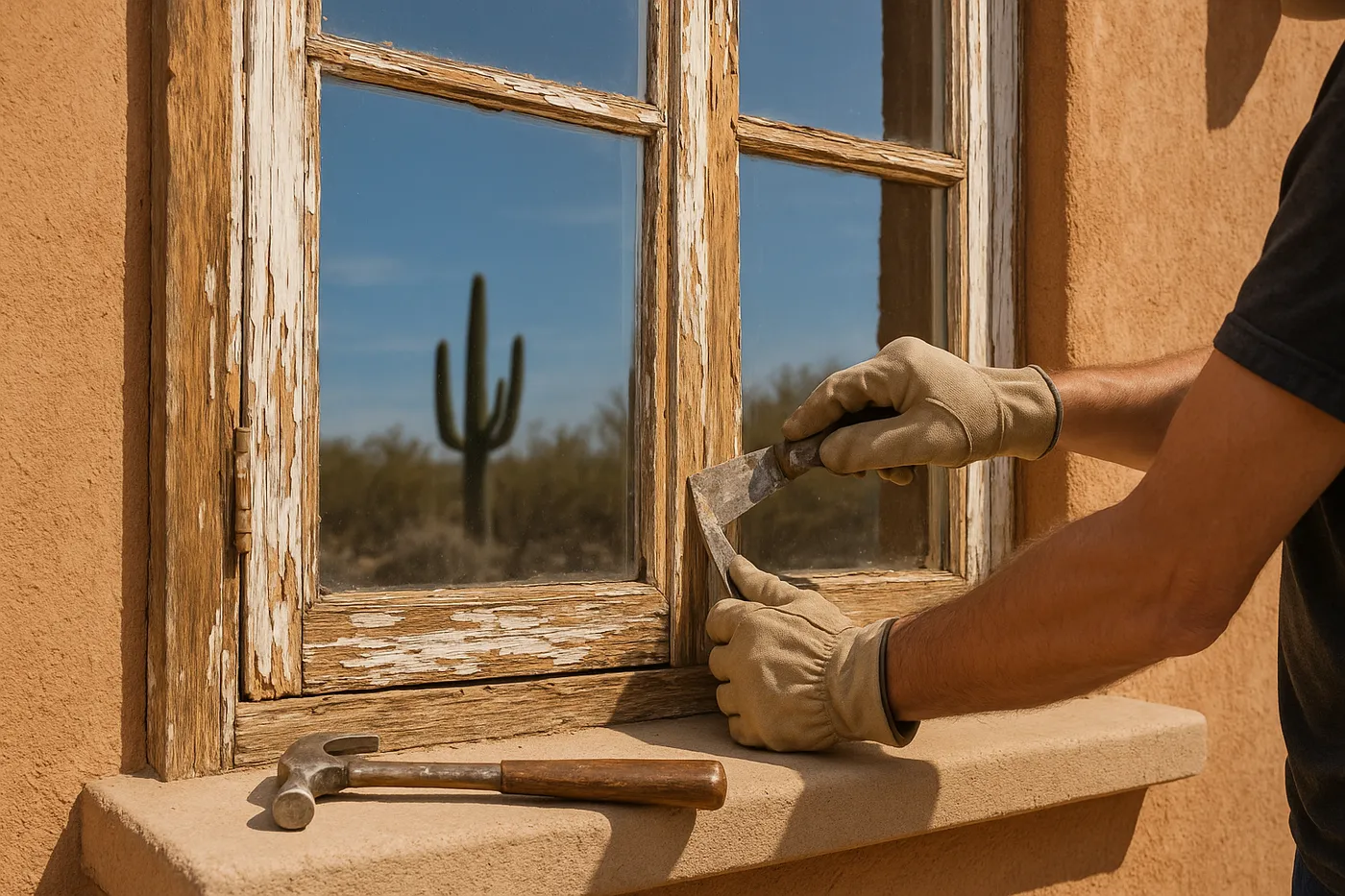
Living in Maricopa County means dealing with gorgeous sunsets, but honestly, that same sun is absolutely cooking your window frames year-round. You probably do not notice the cracking, peeling, or fading until a summer dust storm blows right through a compromised seal. Let me walk you through how to breathe life back into those tired frames before the next monsoon season hits.
The Brutal Reality of Desert Weather on Windows
Here’s the thing. We love our mild winters here in the Valley, but our summers are a totally different beast. Ultraviolet rays bake everything they touch. Wood dries out and splinters. Aluminum gets so hot you could practically fry an egg on it. And vinyl? Vinyl can actually warp if it isn’t manufactured for this specific desert climate. Sometimes I wonder how our houses stay standing at all when it’s 115 degrees out.
Your window frames take the absolute brunt of this abuse. They stand right on the frontline between your cool, air-conditioned living room and a literal oven outside. Restoring them isn’t just about making your house look pretty from the curb. It is about keeping your cooling bills from completely ruining your summer budget. If the frames degrade, the glass panes shift. When the glass shifts, the insulating gas fill between the panes escapes. Suddenly, your high-efficiency window is just a very expensive hole in the wall.
Assess the Damage: What Are We Actually Dealing With?
Before grabbing a sander, you have to figure out what material you are working with. People often think all window frames are basically the same. They really aren’t. Treating a classic wood sash like a modern aluminum frame is a fast track to ruining your window entirely. You know what? Let’s break it down simply.
Wait, aren’t vinyl windows totally maintenance-free? Well, actually, that’s a bit of a myth. Sure, you don’t paint them like you do wood, but the weatherstripping still degrades. The glazing beads—those thin strips holding the glass securely in the frame—dry out and snap. You still have to pay attention to them as the years go by.
Washing Away the Desert Grime
You can’t fix what you can’t see. Before we talk about tools and paint, we need to talk about dirt. A massive haboob rolling through Chandler or Gilbert leaves a fine layer of dust jammed into every single crevice of your home’s exterior.
Grab a bucket of warm water and a good squirt of Dawn dish soap. Use a soft nylon brush to scrub the frames, the tracks, and the sills. Hose it off gently. Do not use a pressure washer near your windows! A high-pressure blast forces water straight past the seals and directly into your drywall. A simple garden hose works perfectly fine. Let everything dry completely. In our dry heat, that usually takes about twenty minutes.
Historic Charm vs. Modern Reality
If you live in one of the historic districts in Phoenix—like Encanto-Palmcroft or Coronado—you probably have original wood windows. They are absolutely beautiful. They carry a specific charm that modern materials just cannot replicate. But honestly, maintaining them in this climate is a part-time job. You want to preserve that historical integrity, so restoration is almost always the preferred route over replacement. You have to be meticulous. Stripping eighty-year-old paint requires care, especially since older layers likely contain lead.
On the flip side, if you live out in a newer subdivision in Surprise or Buckeye, you probably have builder-grade aluminum or vinyl. These materials degrade differently. Builders often install the cheapest options available to keep construction costs down. Upgrading these might make more sense than trying to squeeze another five years out of failing builder-grade frames.
Grabbing the Right Gear for the Job
You cannot just slap some leftover interior wall paint on a sun-baked sill and call it a day. You need the right stuff. Preparing your toolkit properly saves you hours of frustration later.
If you have wood frames showing signs of dry rot, grab a two-part epoxy wood filler. Bondo Wood Filler is an absolute lifesaver here. It cures incredibly fast, even on a hot afternoon. For sanding, stick with a good aluminum oxide paper like 3M Pro Grade. You will want 80-grit to knock down the rough patches and 120-grit to smooth the surface out nicely.
And please, do not skimp on the caulk. Get a high-quality exterior polyurethane or a premium elastomeric sealant. DAP Dynaflex 230 is a solid choice. Cheap acrylic caulk just cracks by August. Also, grab a roll of green FrogTape. Standard masking tape bakes onto the glass in the Arizona sun and leaves a sticky mess that takes hours to scrape off with a razor blade. Spending an extra ten bucks at the hardware store now saves you major headaches next year.
The Step-by-Step Frame Revival Process
Ready to get your hands dirty? Restoring your frames is mostly about patience. The actual labor is quite manageable, assuming you take it one step at a time.
- Scrape away the sins of the past. Use a stiff putty knife to remove loose paint and flaking caulk. Be gentle around the glass. You do not want to accidentally slice through the weatherstripping.
- Sand it down. Give the whole frame a thorough sanding. This gives your new primer something to grip. Wipe away the resulting dust with a damp tack cloth.
- Fill in the gaps. Apply your Bondo or wood filler to any cracks, gouges, or rotted spots. Overfill the holes slightly. The filler usually shrinks a tiny bit as it dries. Once it hardens completely, sand it flush with the surrounding frame.
- Seal the edges. Run a fresh bead of that DAP sealant anywhere the frame meets the stucco siding or the glass. Smooth it out with a wet finger. It gets messy, but it creates a watertight barrier against those sudden July microbursts.
- Prime and paint. Use a high-build exterior primer. Follow it up with two coats of 100% acrylic exterior latex paint. Time your painting wisely! Applying paint at two in the afternoon in August is a recipe for disaster. The paint flash-dries before it even levels out, leaving you with ugly brush strokes. Paint in the early morning instead. Light colors reflect the sun much better. Dark colors absorb heat and fade twice as fast. Just something to keep in mind when choosing your color palette!
When to Put the Sandpaper Down
When is a frame just too far gone? It is a tough pill to swallow, but sometimes restoration is an utter waste of your weekend.
Let me explain. If you press a flathead screwdriver into a wood frame and it sinks in like warm butter, that wood is dead. Rot spreads quickly. You can patch a small spot, but you cannot patch an entire sill. If your aluminum frames have broken thermal breaks—the insulated barrier inside the metal that stops heat transfer—your precious air conditioning is leaking right out the window.
And if your frames are physically warped so much that you have to slam the sash down to lock it? Yeah, no amount of paint fixes structural failure. It is frustrating, I know. You just want a quick fix. Holding onto compromised windows ends up costing you a fortune in energy loss over time. Sometimes, you just have to wave the white flag and start fresh.
Let the Local Experts Step In
You know what? Restoring window frames is a fantastic weekend project if the damage is minor and you have the time. But if you are looking at your house right now, sweating at the thought of scraping twenty windows in the Arizona heat, you do not have to do it alone.
Whether your frames need a professional touch-up or it is simply time to upgrade to energy-efficient replacements built specifically for Maricopa County, we’ve got your back. At Arizona Window Company, we know exactly what works here and what fails. We handle the heavy lifting so you can stay cool inside.
Don’t wait for your cooling bills to spike again next summer. Reach out to us today.
Call us directly at 480-526-4456 or Request a Free Quote on our website to see how we can protect your home from the desert sun.